

Predictive surveillance may become one of the defining challenges of the artificial intelligence era. During a keynote delivered in November 2024 at NEARCON, Edward Snowden argued that the world is entering a new phase of digital control, one where artificial intelligence transforms massive collections of data into systems capable of understanding, anticipating, and potentially influencing human behavior. More than a decade after his famous revelations about the NSA, Snowden’s warning is no longer focused on data collection itself. It is focused on what happens when machines learn how to interpret that data at planetary scale.
Most people remember Edward Snowden as the man who exposed global surveillance programs in 2013. His name remains associated with leaked NSA documents, secret intelligence operations and the debate surrounding privacy in the digital age.
Yet Snowden’s 2024 speech was not primarily about the past.
It was about the future.
More specifically, it was about the collision between artificial intelligence and surveillance infrastructure.
The systems revealed in 2013 never disappeared. Governments continued collecting data. Technology companies continued building profiles. Social media platforms continued learning more about their users every year.
What changed was the arrival of powerful AI systems capable of turning oceans of information into meaningful predictions.
That shift may prove more significant than the surveillance programs themselves.
How predictive surveillance differs from traditional surveillance
Traditional surveillance is fundamentally reactive.
Information is collected.
Data is stored.
Analysts investigate a specific individual.
Conclusions are drawn after the fact.
Predictive surveillance changes that model entirely.
Instead of looking backward, predictive surveillance attempts to look forward.
Artificial intelligence systems can process vast quantities of information simultaneously and identify patterns that no human analyst could realistically detect. Search history, purchasing behavior, social interactions, location data and browsing habits become signals inside a larger behavioral model.
The objective is no longer to determine what happened yesterday.
The objective becomes estimating what might happen tomorrow.
This is a profound change in how power operates.
A government does not necessarily need to know everything about an individual. It only needs enough information to generate useful probabilities.
The more data available, the more accurate those probabilities become.
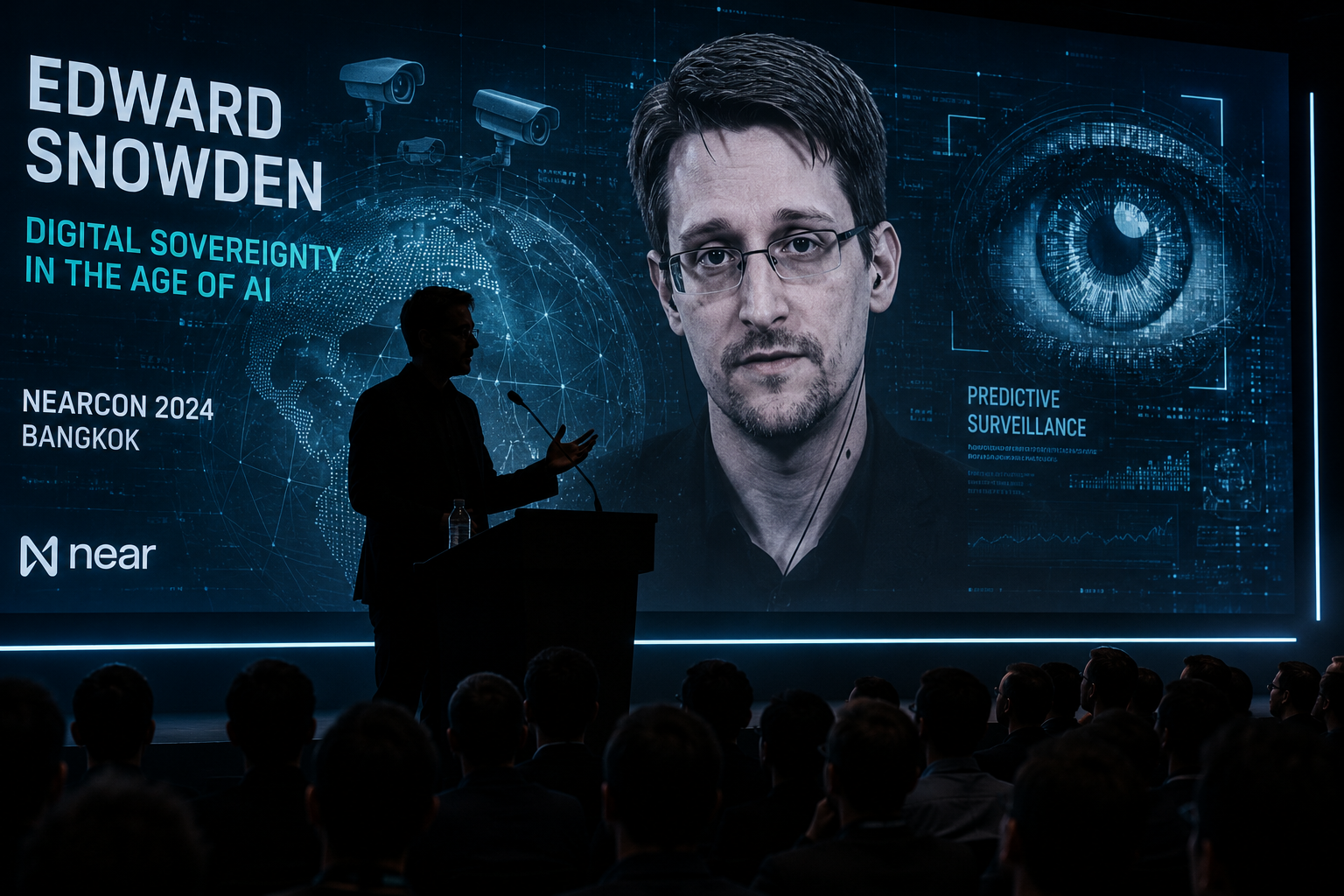
Why AI makes predictive surveillance possible
For decades, one factor limited large-scale surveillance.
Human attention.
Even if governments collected billions of records, someone still had to analyze them.
Artificial intelligence removes that bottleneck.
Modern machine learning systems can automatically classify information, identify anomalies, recognize faces, transcribe speech, detect relationships and generate behavioral profiles.
What once required thousands of analysts can increasingly be performed by algorithms.
This is why predictive surveillance matters.
The challenge is not that more data is being collected.
The challenge is that machines can finally understand it.
A smartphone no longer reveals only where you are.
It reveals routines.
Habits.
Relationships.
Preferences.
Influence networks.
Potential future actions.
When enough information is combined, a digital profile begins to emerge that may understand a person’s behavior surprisingly well.
Sometimes better than the individual understands themselves.
Predictive surveillance and the rise of anomaly detection
One of the most important ideas presented by Snowden concerns anomaly detection.
Artificial intelligence does not necessarily need to identify criminals.
It only needs to identify people who behave differently from the norm.
Different spending patterns.
Different social relationships.
Different communication habits.
Different political interests.
Different lifestyles.
This creates a difficult question.
Throughout history, progress has almost always come from people who behaved differently.
Inventors were unusual.
Entrepreneurs were unusual.
Artists were unusual.
Scientists were unusual.
Dissidents were unusual.
Innovation itself begins as an anomaly.
Yet predictive surveillance systems are designed to find anomalies.
That tension represents one of the most important philosophical questions of the AI age.
How do societies preserve creativity and freedom while simultaneously building systems optimized to detect deviations from average behavior?
The end of forgetting
Perhaps the most powerful idea in Snowden’s speech has nothing to do with surveillance technology.
It concerns memory.
Human civilization has always benefited from forgetting.
Mistakes faded.
Embarrassing moments disappeared.
Bad decisions slowly lost their relevance.
The passage of time provided a form of social forgiveness.
Artificial intelligence threatens to change that dynamic.
Every photograph can be indexed.
Every conversation can be transcribed.
Every video can be analyzed.
Every message can become searchable.
For the first time in history, forgetting is no longer guaranteed.
Machines can remember indefinitely.
The implications extend beyond privacy.
They affect identity.
Reputation.
Politics.
Creativity.
And ultimately freedom itself.
People behave differently when they know they may be recorded forever.

The hidden danger of predictive surveillance
Many discussions about AI focus on automation.
Others focus on job displacement.
Some focus on existential risks.
Snowden draws attention to a different problem.
The concentration of informational power.
Who controls the systems performing predictive surveillance?
Who owns the data?
Who decides what constitutes suspicious behavior?
Who audits the algorithms?
These questions are becoming increasingly important because AI systems influence more aspects of daily life every year.
The danger is not necessarily a dystopian future controlled by a single government.
The danger may be a world where thousands of institutions continuously observe, score and predict human behavior.
A society governed by probabilities rather than principles.
Can technology also defend privacy?
Despite his concerns, Snowden does not advocate rejecting technology.
Instead, he argues that individuals should understand it.
The same technologies enabling predictive surveillance can also strengthen personal freedom.
Encryption remains one of the most powerful privacy tools available.
Open-source software increases transparency.
Local AI models reduce dependence on centralized providers.
Decentralized networks can distribute power more evenly.
Emerging technologies focused on digital sovereignty may help create spaces where surveillance becomes significantly more difficult.
The future is not predetermined.
Technology itself is neutral.
The critical question is who controls it.
Why Snowden’s warning matters in 2025 and beyond
The most important takeaway from Snowden’s keynote is that surveillance is evolving.
The world is moving from a model based on observation toward a model based on prediction.
Predictive surveillance represents a new stage in the relationship between citizens, corporations and governments.
The infrastructure already exists.
The data already exists.
Artificial intelligence is providing the missing layer.
For this reason, the debate surrounding privacy can no longer focus exclusively on data collection.
The conversation must expand toward prediction, behavioral analysis and digital sovereignty.
The future of freedom may depend on it.
Related Reading
- Digital Sovereignty: What It Really Means and Why It Matters
- Nym VPN: The Privacy-First Solution Reshaping Digital Freedom
- Choosing the Future of Privacy
- Proton Mail vs Gmail: Time to De-Google Your Life